
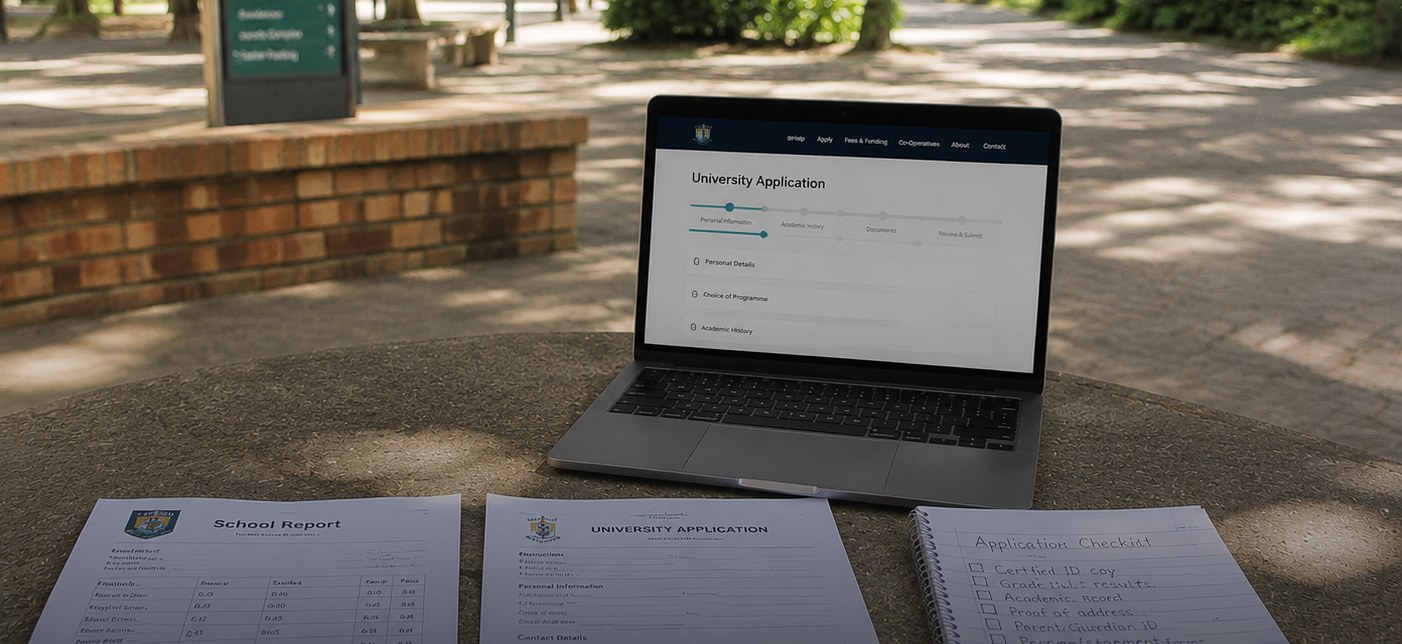
Meeting the APS minimum for a degree feels like it should mean you're in — but for many popular degrees, it's only the starting point. Here's what actually happens behind the scenes once you submit an application.
Minimum requirements are a filter, not a guarantee
Every degree publishes a minimum APS and a set of required subjects. That minimum exists to filter out applicants who can't cope with the course academically — it is not a promise of a place. For popular, oversubscribed degrees (Medicine, Law, Engineering, Actuarial Science, Psychology, and most Commerce degrees at bigger universities), far more qualifying applicants apply than there are available seats.
How universities rank applicants above the minimum
When a faculty has more qualifying applicants than spots, it ranks them — usually by APS, sometimes combined with specific subject performance (a separate "faculty score" weighting Maths and Science more heavily for a Science degree, for example). This means two learners who both meet the minimum APS can have very different outcomes: the one with a higher ranked score gets the offer first.
Some faculties add extra steps on top of this ranking — Medicine commonly requires a separate aptitude test (like the NBT or a faculty-specific test) and sometimes an interview, in addition to APS.
Provisional acceptance
If you apply before you have your final NSC results (which most learners do, using trial exam results), any offer you receive is provisional. It's conditional on your final results meeting or exceeding what the university assumed when it made the offer. If your final results come in lower than your trial results, a provisional offer can be withdrawn — which is exactly why it matters to keep your effort up through finals even after you've received a provisional acceptance.
Waiting lists aren't a rejection
Being placed on a waiting list means you met the requirements but there wasn't space for you at the time decisions were made — it is not the same as being rejected. Waiting lists move as other applicants decline their offers or fail to meet their conditions, right through January and sometimes into February. If you're on one, keep checking your application portal and email regularly, and have a backup option (another university, a different degree, or a college) confirmed in the meantime so you're not left with nothing if the wait doesn't resolve in your favour.
Apply to more than one option
Because ranking above the minimum is common for competitive degrees, it's worth applying to more than one university and, where possible, more than one degree, rather than betting everything on a single application to a single oversubscribed programme.